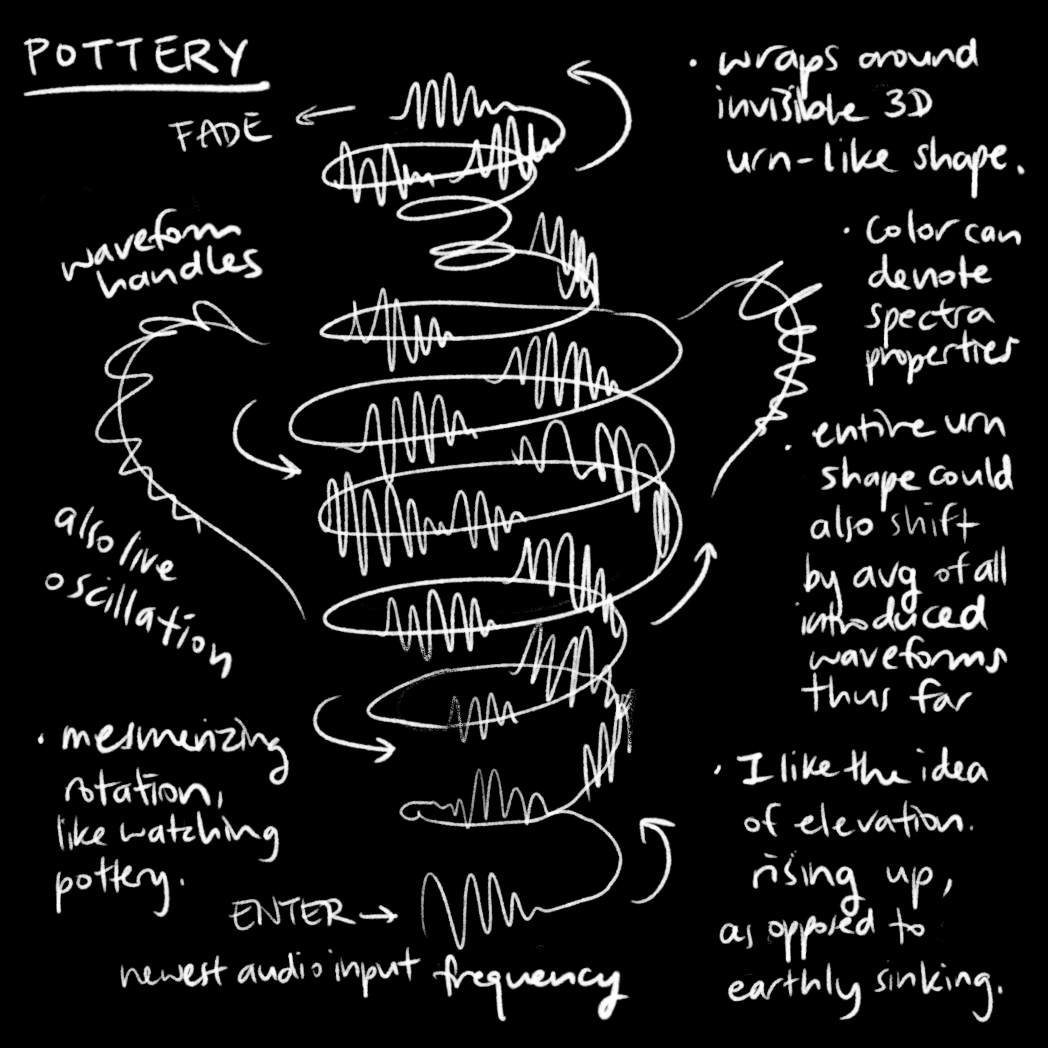
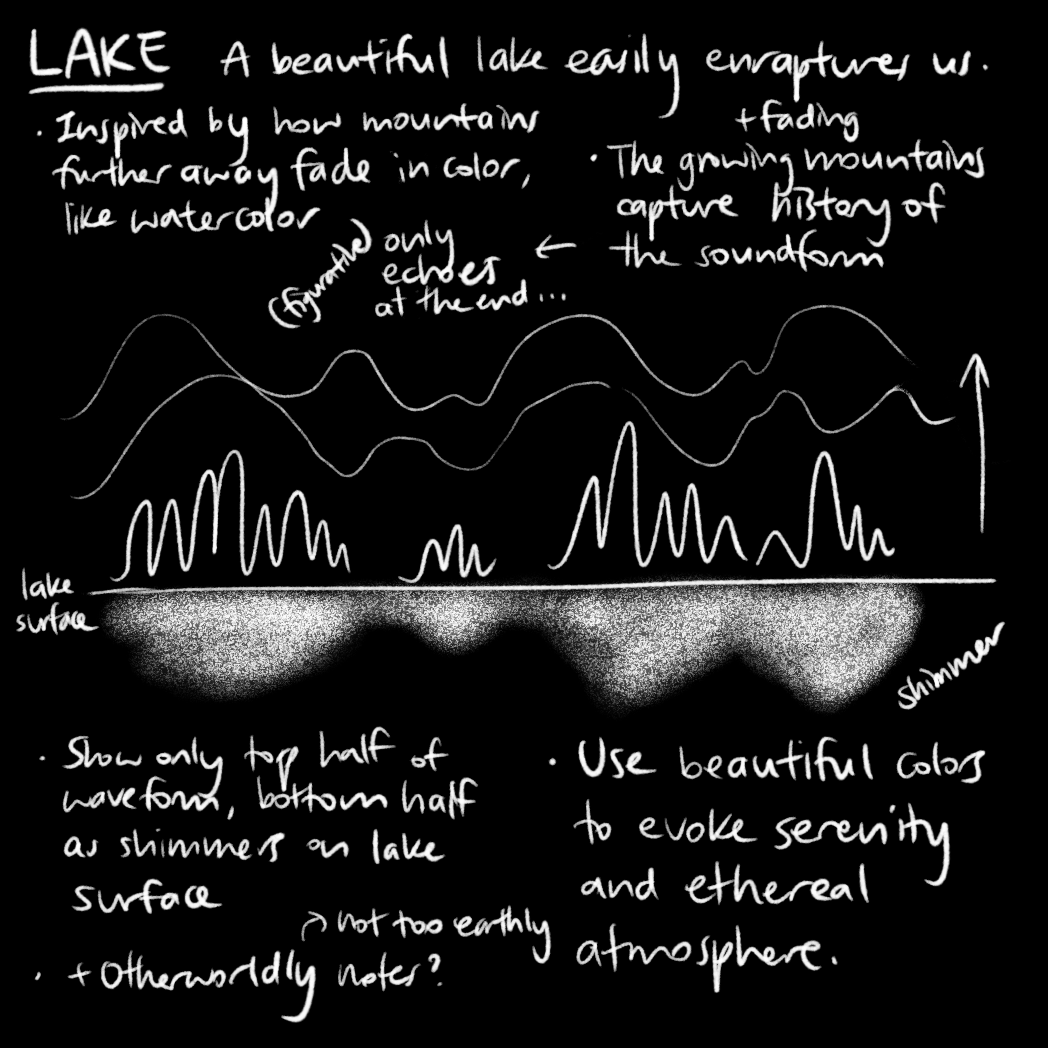
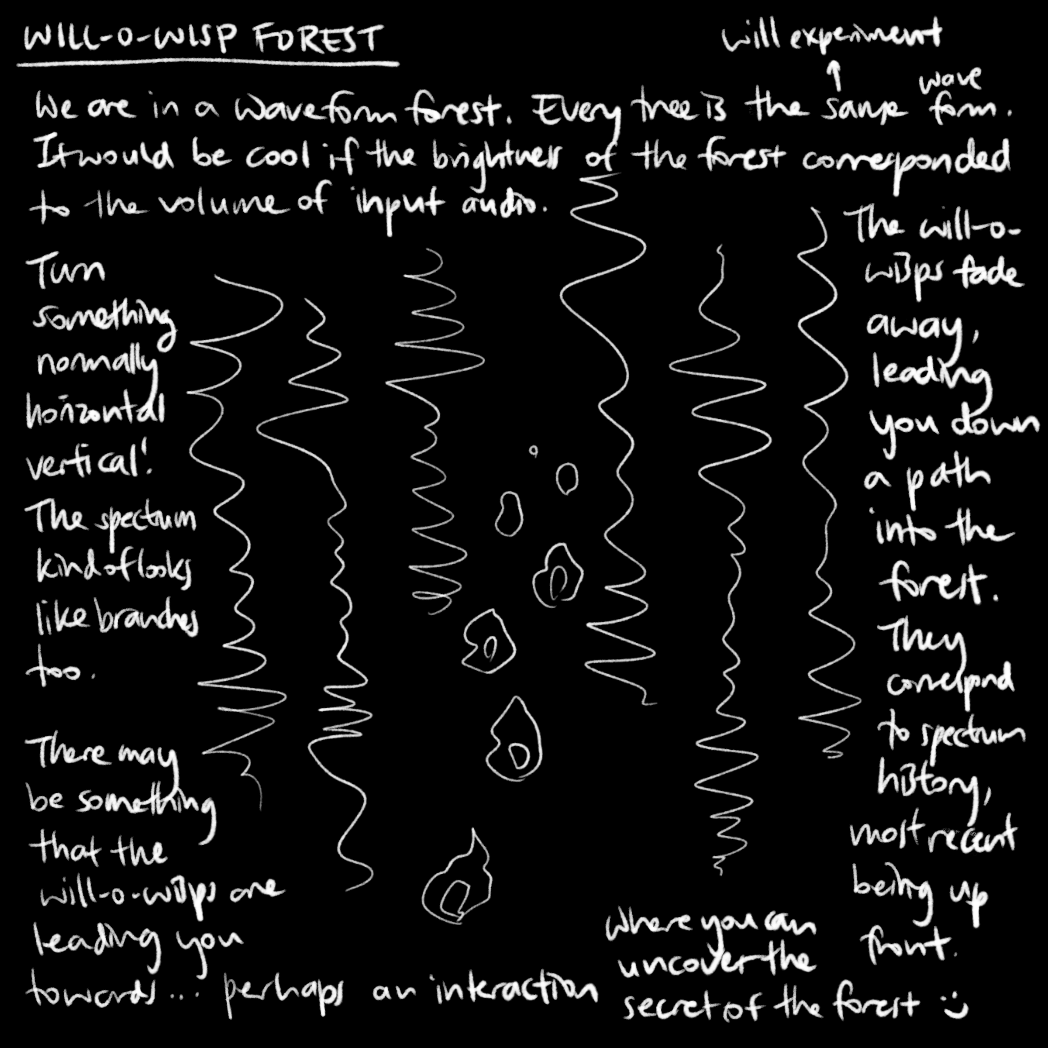
I’ve played with sndpeek-minimal.ck to show my DJ friend how audio input can directly translate into waveform visuals. Then I was wondering, how would we isolate the music from the background noise of the event? Would the music blasting through the speakers be a loud enough input to override the noise of the people? Would there be any perceivable delay, especially if the graphics was complex, or would it appear highly responsive and accurately matched? Am I to connect specific cords to isolate audio input not from a microphone, but from a direct digital signal source? Is there even a point in making it an interactive experience when maybe it’s more optimal to feed in a BPM that controls the graphics — but how would we even do that? I had lots of questions, but I’m left with a drive to create beat-aligned graphics visuals for a DJ set by the end of this academic year.
As for learning ChuGL, I’ve sorted through the API Reference while building my first audiovisual program bubble.ck in Chuck and ChuGL for HW1. I looked through Color to learn about the default defined shades and GWindow to attempt detecting mouse clicks on specific objects. I couldn’t figure out how to do that. I learned how to manipulate the background color with GScene, added a GOrbitCamera, and learned that I can only apply custom material properties to GMesh, not a SphereGeometry. I might totally be wrong, but that’s what I gleaned from the example code. I dived a little bit into the Material, PBRMaterial, and PhongMaterial properties and from running the code files, I took random, sometimes unexpected and unintentional components from the examples beyond what I was inspecting them for. Overall, seems like there is so much to learn to be able to make anything. A little intimidating and feeling like I need to put a lot of time into this, but I know I’ll make a few things this quarter.